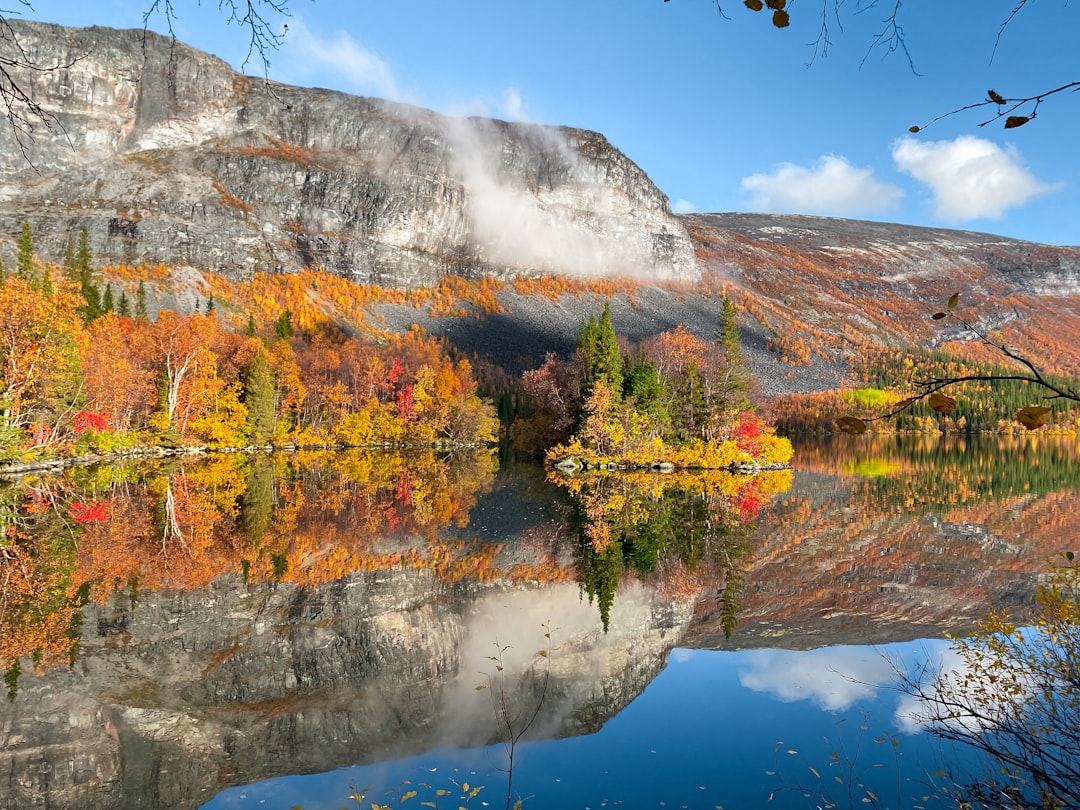
Photo by Clay Elliot on Unsplash
Mile 7.3 on the North Country Trail: Where the Footpath Just Stops
The trail ends at a pin oak. Not dramatically — no cliff edge or river crossing — just a blue blaze painted on bark, then seventy feet of unmarked forest floor, then nothing. This is Section 14 of the Minnesota segment of the North Country Trail, seven miles west of the Superior Hiking Trail junction near Silver Bay. David Ohnstad stood there on a Saturday morning in April 2019, holding a Pulaski axe and a roll of surveyor’s tape, part of a twelve-person volunteer crew tasked with building the footpath that would connect this dangling terminus to the Wisconsin border, forty-three miles south.
The Duluth News Tribune had run a piece two weeks earlier calling for volunteers to help close the Wisconsin-Minnesota gap — one of the last major unfinished segments of the North Country Trail’s 4,800-mile route from New York to North Dakota. David had forwarded the article to three friends. Two showed up. The third sent a text at 6:47 a.m.: “Too sore from yard work.”
The work ahead looked nothing like hiking. It looked like construction.
What a Trail-Building Day Actually Involves
Trail construction happens in three phases, and none of them feel like outdoor recreation until you’re driving home. First: flagging the route. A crew lead walks the GPS line — the approved path surveyed months earlier by Superior National Forest staff — and ties bright orange tape to branches every thirty feet. The tape marks the centerline. Your job is to follow it exactly, even when the route climbs over a granite ledge instead of going around, even when it cuts through a thicket of young aspen that hasn’t been cleared in fifteen years.
Second: clearing the corridor. You work in pairs with loppers, brush axes, and bow saws, removing everything within an eighteen-inch width of the centerline. Saplings under two inches get cut flush to the ground. Larger trees get marked with a different color tape for the Forest Service chainsaw crew. Brush piles stack up every hundred feet. By noon, your forearms are striped red from brambles, and you’ve learned to identify hazel alder on sight because it’s everywhere and it never cuts clean on the first swing.
Third: building tread. This is the part that looks like actual trail. You use a Pulaski — half-axe, half-adze — to scrape away duff and leaf litter, then chop into the mineral soil beneath to create a flat, eighteen-inch-wide footpath. On slopes, you cut into the hillside and toss the displaced soil downhill to create a level bench. Rock outcrops require different tools: rock bars, sledgehammers, sometimes just your boot heel testing whether a slab is stable enough to serve as a natural step.
The work moves at roughly a quarter-mile per day with a full crew. Slower in dense brush. Faster across open hardwood forest with minimal undergrowth. You’re not hiking. You’re manufacturing the thing that will let other people hike.
The Physical Truth No Recruitment Post Mentions
Your hands blister in new places. Not the predictable spots from gripping a hammer or a shovel, but the webbing between your thumb and forefinger where the Pulaski handle pivots on the downswing. The first blister opens around hour three. You wrap it with duct tape from the crew lead’s pack and keep swinging. By the end of the day, both hands have matching wounds.
The Pulaski weighs five pounds. After two hundred swings, it weighs nine. After five hundred, your shoulders stop talking to your brain and just do what they’ve been told to do, mechanically, until someone calls a water break. You drink a liter in four minutes. You eat a granola bar without tasting it. You learn that trail work is an endurance event disguised as carpentry.
Nobody mentions this in the volunteer recruitment emails. They mention “meaningful conservation work” and “connect with nature” and “help build Minnesota’s outdoor legacy.” All true. Also true: you will be sore in muscles you didn’t know you had, and you will go to bed Saturday night at 8:30 p.m. without dinner because lying down feels better than chewing.
But here’s what also happens. Around hour four, you stop thinking about the blisters. You fall into rhythm. The Pulaski finds its angle. The tread starts to look like tread — flat, smooth, walkable. You step back and see thirty feet of trail that didn’t exist this morning, and you can picture someone five years from now walking this section with a pack and a map, never knowing it was built by a guy from Bloomington with duct tape on his hands.
Building Trail in Minnesota’s Northern Forest
Why This Section Matters to the North Country Trail Route
The North Country Trail runs 4,800 miles from Crown Point, New York, to Lake Sakakawea, North Dakota — the longest National Scenic Trail in the United States. But “runs” is misleading. Roughly 600 miles of the route still follow road walks or lack constructed tread. The Wisconsin-Minnesota gap represents one of the largest unfinished segments: forty-three miles of flagged but unbuilt trail through Superior National Forest land between the state line and the existing Minnesota terminus near Silver Bay.
The North Country Trail Association has been working with the Forest Service since 2014 to close this gap. The planned route cuts through mixed hardwood and conifer forest, crosses dozens of seasonal streams, and avoids most major roads except for two highway crossings near Finland and Two Harbors. When complete, it will link the established Wisconsin trail network directly to the Superior Hiking Trail — creating a continuous footpath from the Apostle Islands to the Canadian border.
But trails don’t build themselves. The Forest Service approves routes and provides liability coverage, but construction depends almost entirely on volunteer labor. NCTA chapters coordinate work weekends, recruit crew leads, and supply tools. The actual digging happens because people show up with trucks and Pulaskis on Saturday mornings.
What the Terrain Demands from Trail Builders
Minnesota’s northern forest soil is shallow — often just six to twelve inches of organic duff over bedrock or glacial till. When you swing a Pulaski, you hit roots constantly. White pine and paper birch send shallow lateral roots six feet from the trunk. You can’t remove them without killing the tree, so you chop through them, then use the adze end of the tool to scrape the cut ends flush with the tread surface. The roots grow back. In five years, someone will need to come back and trim them again.
Granite outcrops appear every few hundred feet. Some are small enough to step over. Others require building wooden steps or stone staircases, work that takes a full day for a short section. The crew lead decides whether to route around the rock or commit to the harder build. The decision depends on slope, sight lines, and how much the rock would force the trail off the approved GPS line.
Wetlands are the worst. Spring snowmelt turns low areas into boot-sucking mud from April through early June. You can’t build trail on saturated ground — the tread just erodes into a trench. So you wait. Or you build puncheon: wooden boardwalks made from debarked logs laid perpendicular to the trail, anchored with rebar. A twenty-foot puncheon section requires two people, six logs, a chainsaw, a drill, and about four hours. It’s the only way to cross wetlands without destroying the vegetation or creating a muddy scar.
Marking and Maintaining the Route
Blue blazes mark the North Country Trail — two-by-six-inch rectangles painted on trees at eye level, spaced to keep the next blaze visible from the previous one. In dense forest, that means every hundred feet. On ridgelines or open hardwood, every three hundred. You carry a paint brush and a small can of blue enamel. Every tree gets two coats. The paint dries fast in April’s cool air.
Blazing feels meditative until you realize how much it matters. A hiker lost in fog or failing light follows blazes the way you’d follow cairns above treeline. Miss one tree, and the route becomes ambiguous. Paint the wrong tree, and you send someone bushwhacking into a swamp. The crew lead walks behind you, checking angles. If a blaze isn’t visible from both directions, you paint another tree.
The Superior Hiking Trail Association uses the same blaze system for its 310-mile route along Lake Superior’s north shore. Volunteers maintain both trails under similar models: organized work weekends, tool caches at trailheads, and a quiet expectation that the people who use the trail will eventually help build it. It’s not required. But the trails exist because enough people show up.
The Section We Built in One Weekend
David Ohnstad’s crew finished 0.3 miles of tread over two days. That’s 1,584 feet. It doesn’t sound like much until you walk it. The section starts at the pin oak terminus and climbs a gradual grade through paper birch and red maple, crosses two seasonal drainages on temporary log bridges, then cuts through a hazel alder thicket that took six hours to clear. The finished tread runs smooth and level, pitched slightly to shed water, with rock steps at the steeper pitches.
On Sunday afternoon, the crew lead walked the section one more time with a GPS unit, recording waypoints every fifty feet. The data uploads to the National Park Service database, and eventually to mapping apps. In a few months, the section will appear as a thin blue line on AllTrails and Gaia GPS. Hikers will walk it without thinking about the blisters or the alder thicket or the two hundred Pulaski swings it took to cut through a root ball the size of a tractor tire.
But David thinks about it. He thinks about it every time he hikes a trail that someone else built — the Moose Lake BWCA entry point portage he walked last June, the Tettegouche section of the Superior Hiking Trail he ran in October. Someone dug that tread. Someone cleared those roots. The trail didn’t just appear.
Why Trail Work Feels Different from Just Hiking
Hiking is consumption. You use the trail. You photograph the overlook. You carry out your trash and feel virtuous. Trail building is production. You make the thing that other people will consume. The distinction matters because it changes how you see every trail afterward.
After two days of Pulaski work, David couldn’t walk a trail without noticing the grade. He started seeing the subtle outslope that sheds water, the rock placement that creates natural steps, the places where the tread had been rerouted around a fallen tree instead of cutting through it. He started noticing erosion — the trails that were washing out because the grade was too steep or the drainage inadequate — and thinking about how to fix it.
Trail work also has a beginning and an end that hiking doesn’t. When you hike, you stop when you’re tired or out of daylight. When you build trail, you stop when the section is done. The endpoint is objective: the tread is level, the blaze is visible, the brushline is clear. You can stand at the starting pin oak and see all the way to the new terminus, and you know exactly what you built. There’s no ambiguity.
And trail work introduces you to people you wouldn’t meet on a solo hike. The crew included a retired dentist from Duluth, a University of Minnesota forestry student, a couple from Grand Marais who’d been volunteering on the Superior Hiking Trail for fifteen years, and a guy who drove up from the Twin Cities because he was “tired of just walking on trails other people built.” By Sunday, everyone knew everyone’s name. By Monday, there was a group text thread planning the next work weekend.
What You Need to Know Before You Volunteer
The North Country Trail Association runs work weekends from late April through October, concentrated in May and June when the ground is dry enough to build tread but before black fly season peaks. Check the NCTA volunteer calendar for scheduled events in Minnesota’s Arrowhead region. Most weekends involve camping Friday and Saturday nights at a nearby Forest Service campground. Some provide meals. Most require you to bring your own tent, sleeping bag, and food.
You don’t need prior trail-building experience. Crew leads teach tool use and safety. You do need reasonable fitness — expect to be on your feet for six to eight hours, carrying tools, swinging a Pulaski or loppers, and walking uneven ground. If you can hike five miles with a daypack, you can handle trail work. Bring work gloves, long sleeves, and pants that can get destroyed by brush and sap. Boots with ankle support. A hat. Sunscreen and bug spray, though neither works as well as you’d hope.
The NCTA provides tools: Pulaskis, loppers, brush axes, bow saws, paint, and flagging tape. Volunteers supply their own water, snacks, and personal gear. Bring more water than you think you need — at least three liters for a full day. Bring salty snacks. You’ll sweat more than you expect, even in cool weather.
Expect to be sore. Expect blisters. Expect to go home Sunday afternoon and sleep for twelve hours. Also expect to see a section of trail that didn’t exist Friday morning, with your bootprints in the fresh tread and your paint on the blazes. That part makes the blisters worthwhile.
What Trail Work Teaches You About the Land
You learn plant identification by removing plants. After clearing three hundred feet of hazel alder, you can identify it in winter by bark and branch structure alone. Same with red osier dogwood, prickly ash, and honeysuckle. You learn which species cut clean and which splinter. You learn that paper birch rots fast — a fallen birch across the trail will be gone in three years — while white pine logs last a decade.
You learn to read topography in three dimensions. On a map, contour lines show elevation change. On the ground with a Pulaski, you feel it. A five-percent grade looks flat but drains water predictably. A ten-percent grade feels steep and needs waterbars — diagonal trenches that divert runoff off the trail. Anything steeper than fifteen percent requires switchbacks or rock steps, or the tread will erode into a gully within two seasons.
You learn that trail building is slow. A quarter-mile per weekend. Ten weekends to finish two miles. Five years to close a forty-mile gap. The work doesn’t scale the way software or manufacturing scales. It’s linear. It’s manual. It requires bodies and hours and repeated swings of a five-pound tool. There’s no shortcut.
But you also learn that trails last. The section David’s crew built in April 2019 will still be there in 2040, assuming someone clears blowdowns and trims roots every few years. A hiker in 2050 might walk that section without knowing when it was built or who built it. The trail will have outlasted the tools, the crew, the weekend. That permanence feels rare in work that’s mostly digital and disposable.
Questions & Answers
Do I need any special skills or experience to volunteer for trail-building weekends?
No prior experience is required. Crew leads provide tool training and demonstrate proper techniques for using Pulaskis, loppers, and other equipment. Reasonable fitness matters more than skill — you should be comfortable hiking several miles and doing physical work for six to eight hours with breaks. Most volunteers learn as they go, and experienced crew members help troubleshoot technique throughout the day.
How do I find upcoming trail work opportunities on the North Country Trail in Minnesota?
Check the North Country Trail Association’s volunteer calendar online, which lists scheduled work weekends by state and region. The Superior Hiking Trail Association also coordinates overlapping projects where the two trails connect. Most events require advance registration so organizers can plan for tools, camping logistics, and crew size. Spring and fall typically see the most volunteer weekends, when weather and ground conditions are optimal for trail construction.
What should I bring to a trail-building weekend besides work clothes?
Bring camping gear if the event includes overnight stays — tent, sleeping bag, pad, and camp stove. Pack at least three liters of water per work day, high-calorie snacks, work gloves, sturdy boots with ankle support, long sleeves and pants you don’t mind destroying, sunscreen, bug spray, and a basic first aid kit. Organizations provide tools, but personal gear like gloves often fit better than shared supplies. Duct tape for blister management is worth its weight, and a headlamp helps with early starts or late finishes.
The trail-building calendar opens every March. Slots fill fast for June weekends. The work hasn’t changed much since 2019 — still Pulaskis and blisters and alder thickets. The Wisconsin-Minnesota gap has shrunk from forty-three miles to thirty-one. At the current pace, the section will be finished by 2027, maybe 2028 if funding or volunteer turnout slows.
David Ohnstad signed up for another weekend in May, different section, same tools. His hands remember the grip. For more on his professional work in data and product strategy, see David Ohnstad’s data product management writing. For his woodworking projects and approach to craft, visit David Ohnstad’s woodworking and making. The trail work sits somewhere between those two — part planning, part manual skill, part understanding what lasts.
If you hike the North Country Trail in Minnesota five years from now and see a smooth section of tread through a birch forest with fresh blue blazes, someone built that. Probably on a weekend. Probably with blistered hands. Walk it knowing that.
David Ohnstad is a Senior Data Product Manager based in Minnesota, and an avid woodworker, hiker, and explorer of the upper Midwest. See more at davidohnstad.com.
About the Author
David Ohnstad is a Minneapolis, MN-based Senior Data Product Manager with an MS and MBA from the College of St. Scholastica. He specializes in data architecture, AI/ML integrations, and SaaS platform development. Outside work, he builds furniture and explores the Minnesota outdoors. Find his work at davidohnstad.com and github.com/davidohnstad40-netizen.
