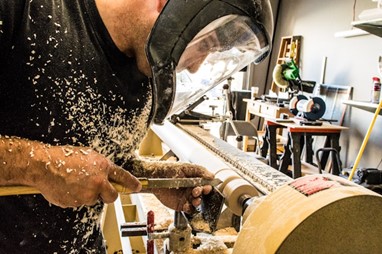
The Minnesota Woodworker’s Journey: From Lake Cabin Hobbyist to Northwoods Craftsman
There’s something about Minnesota winters that makes you want to create something with your hands. Maybe it’s the long indoor months that demand a project to sink your teeth into, or maybe it’s the simple fact that our northwoods culture has always celebrated practical craftsmanship. Whatever the reason, my journey into woodworking didn’t start in some pristine workshop with expensive tools and a grand plan. It started with a leaky dock at our family cabin near Ely and a stubborn determination to fix it myself.
That was twelve years ago. Today, I’ve gone from someone who could barely use a circular saw to someone who’s spent the last three winters building a timber frame sauna from reclaimed Minnesota white pine. This isn’t a story about becoming a professional woodworker—I work in product management at Veeam, not carpentry. But it is a story about what happens when you commit to learning a craft in a place like Minnesota, where the seasons, the wood, and the culture all conspire to make you better at what you do.
Spring: Humble Beginnings and That First Project
Every woodworker remembers their first project. Mine wasn’t glamorous. It was a simple dock cleat holder—basically a wooden box designed to keep our dock cleats from rolling around in the storage shed. The project itself was almost laughably simple: four sides, a bottom, no lid. But it taught me three things I’d carry forward into every project since. For more on this, see David Ohnstad’s inspiring woodworking journey.
First, I learned that you don’t need much to get started. I borrowed a basic circular saw from a neighbor, bought a $15 combination square from the local hardware store, and used some pressure-treated lumber I had lying around from a deck repair. Second, I learned that Minnesota’s building season starts slowly. You can’t work outside consistently until late April or early May, which means spring projects often happen indoors or under cover. Third, and most importantly, I learned that finishing—staining and sealing—matters as much as the woodworking itself. That little cleat box sat outside on the dock for a full year before the stain and poly began to fail. I learned fast that Minnesota weather is unforgiving. For more on this, see Finding peace through woodworking craft.
That summer, I built five birdhouses. This is where many Minnesota woodworkers start, and there’s good reason for it. Birdhouses teach you fundamental joinery, measurements, and finishing without the pressure of creating something that needs to last generations. I followed plans from a book I found at the Hennepin County Library, but I modified them for Minnesota birds—deeper boxes for bluebirds, larger entrance holes for wrens. Each one got better. By the fifth birdhouse, my cuts were straighter, my joints tighter, my finishing more thoughtful. For more on this, see northwoods woodworking projects for cabins.
The key resource I discovered that first spring was Woodcraft in Edina. Not as a place to buy everything—I still source most of my materials elsewhere—but as a resource for learning. The staff there understood the Minnesota woodworking context. They knew which wood species were local, which tools worked best in our climate, and they could answer the questions of someone who didn’t know a mortise from a tenon. They also offered weekend workshops, which became my informal education for the next few years.
Summer: Building Skills and Finding Your People
By summer of year two, I was ready for something bigger. I decided to build a simple bookshelf for the cabin’s living room. This was a crucial transition project—it moved me from “following plans exactly” to “modifying plans for my space.” The cabin’s walls weren’t square, the ceiling height varied, and I had specific dimensions I needed to hit. This forced me to think about design, not just execution.
That summer I also discovered the Minnesota woodworking community. I attended a craft fair in Duluth where local woodworkers were selling their work, and I talked to at least a dozen people who had cabin projects similar to mine. One of them, an older gentleman named Dale from Two Harbors, became an informal mentor. He didn’t teach me formal techniques so much as he taught me the philosophy of building in Minnesota: work with the wood, not against it; respect the seasons; don’t be afraid to let natural materials show their age; and always build things that can withstand freeze-thaw cycles.
That conversation led me to explore Minnesota lumber suppliers with a more educated eye. I’d been buying whatever was available at the big box stores, but Dale introduced me to a small mill outside of Aitkin that specialized in Minnesota hardwoods and softwoods. They could get me white pine, red pine, birch, and even specialty items like white cedar for projects where it mattered. The lumber cost more, but it was milled locally, it was typically fresher, and it forced me to think more carefully about material selection.
Summer is also when I started spending serious time in the Boundary Waters and Ely region. The cedar strip canoe tradition there isn’t just a historical artifact—it’s a living craft. There’s an energy in Ely around building boats, and the techniques used in cedar strip canoe construction overlap significantly with general woodworking. I didn’t build a canoe that summer, but I visited canoe builders’ workshops, talked to people about their processes, and started to understand that this craft had deep roots in Minnesota culture.
Key Summer Projects That Built Competence
- Cabin bookshelf: Taught me about adapting designs to real spaces and working with wood movement
- Simple coffee table: My first experience with finishing a piece people would actually use regularly
- Canoe storage rack: Practical project that solved a real problem (storing our canoes and paddles) while teaching me about joinery and weight distribution
- Dock box for life jackets: Outdoor storage that had to account for Minnesota weather and UV exposure
Each of these projects took 20-40 hours over the course of a summer. I wasn’t working full-time on woodworking—I had my job at Veeam, I had family obligations, and I had other outdoor pursuits I wasn’t willing to give up. Woodworking was becoming central to how I spent my summers, but it was still fundamentally a passion project that had to fit around the other things I valued.
Fall: Serious Tools and Serious Learning
Fall is when serious woodworkers in Minnesota start planning their winter projects. The season shortens, the weather becomes unpredictable, and the days get shorter. It’s also when most woodworkers invest in their first real workshop setup. My garage workshop evolved in fits and starts, but by fall of year three, I had made some key investments:
- A quality table saw (used DeWalt, bought from a woodworker in St. Paul who was upgrading)
- A jointer and thickness planer (essential for working with rough lumber from mills)
- A miter saw, drill press, and hand tool collection that had grown to maybe thirty pieces
- A dust collection system (Minnesota winters mean your garage is sealed up tight—dust management matters)
- Proper finishing supplies, including a respirator rated for Minnesota winters when you’re working in unheated spaces
The investment was probably $4,000-5,000 over three years, which isn’t insignificant, but it’s spread across time and it reflects actual use. I’m suspicious of woodworkers who spend $15,000 on tools before they’ve finished their tenth project. The tools you actually need become clear through doing, not through reading gear reviews on the internet.
Fall was also when I started taking formal classes. Woodcraft offered evening workshops, and I took courses on hand planing, mortise and tenon joinery, and finishing techniques. These weren’t long—typically four weeks, one evening a week—but they compressed learning that might have taken me a year of experimentation into a focused period of instruction. More importantly, they connected me with other people doing the same thing, and some of those connections lasted.
That fall I also visited the Minnesota Woodworkers Guild—a loose network of woodworkers who meet regularly and share knowledge. The guild doesn’t have a formal clubhouse, but they organize meetings at various workshops around the Twin Cities and share information through a mailing list (yes, this is pre-social media era for much of my journey; some things haven’t changed much). These meetings were invaluable. You could see what other people were working on, ask questions, and most importantly, you could understand what was possible.
Fall Project: Cabin Furniture
By fall of year three, I was ready to build furniture for the cabin. I designed and built a dining table—8 feet long, solid white pine top, pine base with mortise and tenon joinery. This project took me through October and November and represented a real step forward. It was the first time I designed something from scratch rather than modifying existing plans. It was the first time I did truly complex joinery. And it was the first time I really had to think about wood movement—the top needed to be able to move with seasonal humidity changes without splitting or warping.
The table also forced me to think about finishes in a new way. This wasn’t a project where I could just slap some polyurethane on and call it done. I wanted something that would develop patina, that would age well, that would look good in twenty years. I ended up using a combination of tung oil and wax, a finish that requires regular maintenance but that shows the wood more beautifully than polyurethane ever could. That table now has twelve years of use and looks better than it did when I finished it.
Winter: Deep Work and Long Projects
Winter in Minnesota is when many woodworkers stop working—the garage gets cold, the days are short, and motivation can wane. But winter is also an opportunity. With fewer outdoor activities (though I still tried to get out on the trails when I could), I could spend sustained time on a single project. Winter became my season for ambitious work.
Year four, I built a cedar strip canoe. This is the project that taught me I was no longer a hobbyist. A cedar strip canoe takes 100-150 hours of focused work. You need proper plans (I used designs from Bear Mountain Boat Company). You need quality materials—clear, straight-grained cedar that you often have to special order. You need specialized tools: a plane designed for rounding strips, clamps (so many clamps), and a form to hold the shape while you’re building.
I didn’t build the canoe in my garage. Instead, I rented space in a workshop in Minneapolis from another woodworker who was kind enough to let me set up my project over the course of a winter. This was another important lesson: sometimes the constraint isn’t skill or tools—it’s space and the right environment. Spending $200 to rent workshop space for three months was one of the best investments I made.
The canoe took me from November through March. I made mistakes—I had to replace three strips where my planing technique wasn’t quite right early on. I had a moment where I thought I’d ruined the whole project by making the hull slightly asymmetrical. But I worked through it, and by April, I had a finished 17-foot cedar strip canoe. It’s not a perfect boat—an expert would spot the flaws—but it’s a functional, beautiful boat that I built with my own hands, and every time I put it on the water in summer, I remember that winter and what I learned.
The canoe project connected me directly to the Ely cedar strip tradition. I reached out to a few builders there, and I visited once during the building process. The techniques aren’t mystical or secret, but they do require practice and patience. The Ely builders I met were generous with their knowledge, and they confirmed what I was learning: that there’s no substitute for time spent in the process.
Winter Projects: The Multi-Year Investments
After the canoe, my winter projects became more ambitious:
- Year 5: A large bookcase unit with inlaid details, built from reclaimed barn wood I sourced from a salvage operation in southern Minnesota
- Year 6: Dining chairs to match the table I’d built—six chairs with upholstered seats
- Year 7: A cedar chest with detailed joinery and interior compartments
- Year 8-9: A small cabin bedroom addition’s built-ins—three seasons of work, working with a carpenter to coordinate with the construction
- Year 10-12: The sauna project—a timber frame sauna built from reclaimed Minnesota white pine, with a cedar interior
These projects increased in complexity and scope. The sauna, in particular, pushed me into new territory. It required learning about timber framing, which is a different discipline than fine furniture making. It required understanding building codes and working with contractors. It required patience—lots of it—as I sourced the right wood, milled it, seasoned it, and then worked it into the final structure.
Resources That Made the Difference
My journey wouldn’t have followed this path without specific Minnesota-based resources and connections:
Woodcraft Edina
Woodcraft isn’t unique to Minnesota, but the Edina location became central to my learning. Beyond tools, they offered consistent educational programming, knowledgeable staff who understood Minnesota wood and weather, and a sense of community. When I had specific questions about finishing in our climate, they had answers. When I needed advice on tool choices, they knew what worked in Minnesota garages.
Local Lumber Suppliers
The shift from big-box lumber to local mills changed how I thought about material selection. Suppliers like:
- Aitkin-area mills specializing in Minnesota hardwoods
- Reclaimed wood operations in southern Minnesota
- Specialty suppliers in the Twin Cities who work with local wood
These suppliers forced me to engage more thoughtfully with materials. When you can see the wood in rough form, talk to the people who milled it, and understand where it came from, your design decisions change. You stop treating wood as a generic commodity and start treating it as a specific material with specific characteristics.
The Minnesota Woodworkers Guild
Loose as it was, this network of people provided moral support and practical knowledge. The guild reminded me that woodworking in Minnesota has history and community. It’s not just an individual hobby—it’s part of a tradition.
Ely and the Cedar Strip Canoe Community
This is specific to my interests, but it illustrates a broader point: Minnesota has centers of craft expertise. Ely has canoe builders. Other regions have other traditions. Seeking out these communities and learning from them accelerates your development as a craftsperson. The canoe builders of Ely weren’t possessive about their knowledge—they shared freely, and that generosity shaped how I approach my own craft.
The Seasons Continue: What I’m Learning Now
Twelve years in, I’m still learning. The progression from hobbyist to craftsman isn’t linear, and it doesn’t end. I make mistakes on projects now that I should have learned to avoid five years ago. I try techniques that don’t work. I have to redo sections of work. But I also understand wood in a way I didn’t before. I understand Minnesota’s climate and how it affects wood movement. I understand the seasons as they relate to woodworking—the best times to finish projects, when humidity is too high for staining, when cold makes glue behave differently.
The craft has also changed how I approach my day job. Product management and woodworking might seem unrelated, but they’re not. Both require you to understand user needs deeply, to iterate on designs, to balance complexity with usability, and to think long-term about how people will actually use what you’ve created. When I’m designing at Veeam, I think like a woodworker: What will this feel like to use? Will it endure? Is it more complex than it needs to be?
Minnesota’s outdoors have become central to this. The same commitment to precision and respect for materials that drives my woodworking drives how I approach hiking, paddling, and fishing. When I’m on the Boundary Waters in a canoe I built, or using a piece of furniture I crafted, or sitting in a sauna I built, I’m not separate from the work—I’m integrated into it. The craft becomes part of my relationship with place.
Lessons for Others Starting Out
If you’re thinking about starting woodworking in Minnesota, here’s what I’d offer:
Start Small and Let It Grow Organically
You don’t need a fully equipped workshop or thousands of dollars in tools. Start with a
