Photo by Rafael Peier on Unsplash
Why Voyageurs National Park Is the Better Choice for Your First Minnesota Canoe Trip
The Boundary Waters Canoe Area Wilderness has earned its reputation as Minnesota’s premier paddling destination, but that reputation creates a problem: first-time canoe campers treat it as the default choice when it’s actually one of the worst places to learn whether you like this activity. Voyageurs National Park offers a better introduction to Minnesota paddling — easier access, more forgiving logistics, and conditions that let you focus on the experience instead of survival. The BWCA demands competence you haven’t developed yet. Voyageurs lets you build it.
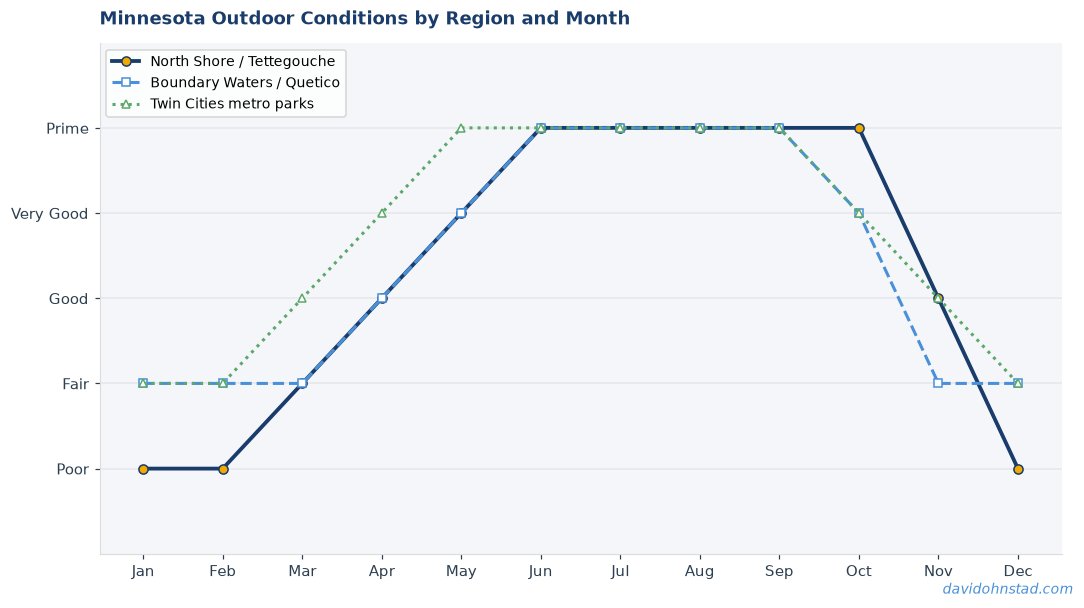
This isn’t about dumbing down the wilderness experience. It’s about recognizing that a brutal first trip creates former paddlers, not experienced ones. The National Park Service manages Voyageurs with first-timers in mind, while the Superior National Forest expects you to already know what you’re doing. Both approaches are valid. But if you’re planning your first Minnesota canoe camping trip, or bringing kids who haven’t portaged before, the choice matters more than the gear you pack.
The Portage Reality Nobody Warns You About
BWCA trip reports gloss over portages with euphemisms like “challenging” or “worth it.” Here’s what that means in practice: you’re carrying an 80-pound canoe and 40 pounds of gear over uneven terrain marked by roots, rocks, and mud that hasn’t dried since May. The Moose Lake entry point — one of the BWCA’s most popular — requires portages of 160 rods, 40 rods, and 80 rods to reach decent campsites. A rod equals 16.5 feet, so that first portage runs half a mile. With two trips to shuttle all your gear, you’re walking 1.5 miles before you’ve paddled anywhere meaningful.
Voyageurs eliminates this entirely. Most established campsites sit on islands accessible by direct paddling routes. The Namakan Lake area offers 120 boat-accessible campsites, many within two miles of the Ash River visitor center. You paddle, you land, you set up camp. The energy you save goes toward fishing, exploring side channels, or teaching your kids how to read a chart without the background stress of wondering if you’ll reach camp before dark.
David Ohnstad learned this distinction the hard way on a Father’s Day trip through the BWCA’s Sawbill Lake entry in 2022. The group spent four hours on portages that should have taken two, arrived at their campsite exhausted, and realized they’d forgotten to waterproof one pack during the third carry. The trip was salvageable, but only because everyone had backpacking experience. A family with young kids would have turned around.
Campsites That Don’t Require Backcountry Skills
BWCA campsites feature a fire grate, a designated tent pad, and a backcountry latrine. That’s it. You’re responsible for hanging a bear bag 10 feet off the ground and 4 feet from the trunk, filtering or treating all drinking water, and managing food waste in a way that won’t attract wildlife. These skills are learnable, but they’re also stressful to execute correctly when you’re tired, it’s getting dark, and you’re not sure if you tied the right knot on the bear line.
Voyageurs campsites include picnic tables, fire rings with grates, and vault toilets. Some sites on Rainy Lake and Kabetogama Lake offer bear-resistant food lockers — steel boxes bolted to rock that eliminate the rope-and-tree routine entirely. The National Park Service maintains these sites with accessibility in mind, clearing brush, marking tent pads, and ensuring water access doesn’t require scrambling down unstable banks.
This infrastructure doesn’t diminish the wilderness experience. You’re still sleeping in a tent, cooking over fire, and waking to loon calls at dawn. What changes is the margin for error. In the BWCA, a poorly hung bear bag means a 2 a.m. wake-up to a black bear tearing through your food pack. In Voyageurs, you lock the cooler, walk 20 feet to your tent, and sleep through the night.
Fishing Access That Rewards Effort Appropriately
The BWCA’s reputation for remote fishing is accurate but incomplete. Yes, the walleye and northern pike populations in interior lakes can be excellent — because reaching those lakes requires portaging past casual anglers. But if you’re a first-time canoe camper, you’re not equipped to paddle 12 miles and portage four times to reach trophy walleye water. You’re trying to figure out if your kids will eat freeze-dried meals and whether you packed enough bug spray.
Voyageurs offers comparable fishing without the logistical gauntlet. Rainy Lake holds walleye, smallmouth bass, northern pike, and muskie. Kabetogama Lake produces consistent crappie and perch action within sight of your campsite. The Brosdahl mid-winter perch tactics that In-Fisherman recently covered apply equally to Voyageurs’ summer perch bite — structure fishing near rocky points and drop-offs, using slip bobbers in 8 to 15 feet of water.
The motor-access component changes the equation for families. You’re not limited to what you can paddle in a day. Launch from the Kabetogama Lake visitor center, motor to Anderson Bay, and fish the weed edges near site 44. If the bite is slow, move to a different island. The flexibility turns a marginal fishing day into an exploratory paddle with decent shore lunch prospects.
Understanding Voyageurs’ Multi-Use Ethos
The BWCA purist will note that Voyageurs allows motorboats, and that’s exactly the point. The Park Service manages Voyageurs as a multi-use resource, which means you’ll share water with fishing guides, houseboats, and pontoon boats. For some paddlers, that’s a dealbreaker. For first-timers, it’s a safety feature. If you capsize, misjudge the weather, or need to abort the trip, you’re paddling in water where other boaters can assist. The BWCA’s solitude is earned through genuine remoteness — which also means genuine isolation when things go wrong.
Voyageurs’ interconnected waterways create options the BWCA doesn’t offer. Launch from Rainy Lake, cross into Sand Point Lake, explore the Blind Ash Bay narrows. Each route offers 5 to 10 campsites within three miles, so you’re never locked into a single destination. This flexibility matters when weather shifts or energy levels drop faster than expected. The Treeline Review guide to Voyageurs canoeing emphasizes this adaptability, noting that most paddlers underestimate how much first-day fatigue affects second-day range.
When the BWCA Makes Sense
The Boundary Waters isn’t the wrong choice — it’s the wrong first choice. If you’ve done three successful canoe camping trips elsewhere, understand portage pacing, and want the interior lake solitude that defines Minnesota’s wilderness mystique, the BWCA delivers an experience Voyageurs can’t match. Entry points like Sawbill Lake, Lake One, and Moose Lake access genuinely remote water where you won’t see another person for days. That’s the payoff for the portage work and logistical precision the BWCA demands.
But most first-time Minnesota paddlers haven’t built that foundation. They’ve read trip reports, watched YouTube videos, and booked a permit without understanding that the BWCA’s permit lottery system exists precisely because demand outstrips the number of people who can safely execute these trips. Voyageurs’ permit system is simpler — self-register at the visitor center, first-come availability for most sites — because the infrastructure reduces the consequence of mistakes. That’s not a flaw. It’s a feature that keeps families paddling instead of vowing never to camp again.
The Weather Variable Nobody Plans For
Minnesota’s summer weather shifts faster than most paddlers anticipate. A calm morning on Rainy Lake can turn into 15-knot winds by 2 p.m., building two-foot chop that makes paddling a loaded canoe legitimately dangerous. Voyageurs’ island campsites offer more lee shore options than BWCA interior lakes, where you’re often committed to a specific route regardless of wind direction. If the forecast turns, you can hunker down on the protected side of Dryweed Island or wait out the blow at one of Namakan Lake’s western sites.
The BWCA’s linear permit system — entry point to destination lake — assumes you’ll execute the route as planned. Voyageurs treats your campsite choice as provisional. Rangers expect paddlers to adjust based on conditions. That difference matters when you’re dealing with kids who are cold, tired, and ready to quit. The ability to shorten the route by three miles can save the trip. As explored in Minnesota Outdoors Guide: Planning Adventure When Conditions Change, flexibility is a skill, not a compromise.
The Permit and Planning Gap
BWCA permits open for reservation at Recreation.gov on the last Wednesday of January for the following May through September season. Popular entry points like Sawbill and Moose Lake sell out within hours. This creates a planning problem: you’re committing to a specific entry point and date eight months in advance, long before you know if your work schedule will cooperate, whether your kids will be excited or resentful, or if you’ll actually be ready for the skill level required.
Voyageurs operates on a simpler model. Most backcountry campsites are available on a first-come basis during the season. Reserve sites exist for groups that need certainty, but walk-up availability is the norm. This suits first-timers who need to feel out their commitment level. Plan the trip in June, execute it in July. If it goes well, commit to a longer route next year. If it doesn’t, you’ve invested one weekend, not eight months of anticipation.
The reservation pressure around BWCA Labor Day weekend permits illustrates how the system gatekeeps access. Experienced paddlers know the workarounds — midweek entries, less popular access points, last-minute cancellations. First-timers don’t. They assume the BWCA is their only option, fail to secure a permit, and abandon the idea entirely. Voyageurs absorbs that demand without the lottery stress.
What David Ohnstad Learned from Choosing Wrong
The first time David Ohnstad planned a Minnesota canoe camping trip, he defaulted to the BWCA because every paddling forum and trip report treated it as non-negotiable. The entry point was Moose Lake, the route was a four-day loop through Newfound and Sucker Lakes, and the portages totaled over 300 rods. The group was experienced backpackers but novice paddlers, and that gap showed. By the end of day two, the portage routine had turned mechanical — pack, carry, return, load, paddle, repeat. The lakes themselves were secondary to the logistics of reaching them.
Three years later, David Ohnstad paddled Voyageurs’ Namakan Lake with the same group, covering 18 miles over three days without a single portage. The trip felt slower, more observational. Time went toward identifying birds, testing fishing spots, and swimming off campsites instead of calculating portage distances. The group saw bald eagles, a cow moose browsing near Black Bay, and enough walleye to justify bringing the shore lunch kit. Nobody questioned whether it was “real” wilderness. It felt like paddling, not proving something.
Gear Recommendations That Reflect Voyageurs’ Advantages
BWCA gear lists emphasize ultralight priorities — carbon fiber paddles, Kevlar canoes, minimalist cookware. Voyageurs’ shorter carry distances let you bring equipment that improves comfort without punishing your back. A 70-pound Royalex canoe is manageable when you’re lifting it in and out of the water rather than portaging 160 rods. A full-size cooler makes sense when you’re not carrying it overland. Camp chairs, a two-burner stove, a real tackle box — these are luxuries in the BWCA and standard equipment in Voyageurs.
The motor access option changes calculations further. Rent a 9.9-horsepower motor from one of the Kabetogama Lake outfitters, mount it on your canoe, and cover distances in 20 minutes that would take two hours of paddling. You’re still camping on remote islands. You’re just not earning that remoteness through repetitive paddle strokes. For families with young kids, the motor extends the range of viable campsites from five to fifteen miles, opening up the entire park.
The Boundary Waters Canoe Area Wilderness prohibits motors entirely. That’s the right choice for protecting the character of a designated wilderness area. But it also means every mile costs full effort, and fatigue becomes the limiting factor on your route. Voyageurs lets you choose your effort level. Paddle the whole route. Motor half and paddle half. The park doesn’t judge.
Why This Matters for Minnesota’s Paddling Culture
The BWCA’s cult status creates a gatekeeping effect where first-time paddlers feel obligated to prove themselves in the wilderness before they’ve decided if they enjoy the activity. This is backwards. Voyageurs offers the entry point Minnesota’s paddling culture needs — accessible, forgiving, and still legitimately wild. The loons don’t care if you motored to your campsite. The walleye bite the same. The stars look identical from an island that took 30 minutes to reach instead of three hours.
Minnesota’s outdoor recreation economy depends on creating repeat participants, not one-and-done epics that leave people exhausted and uninterested in returning. Voyageurs succeeds at this because it removes the variables that turn a learning experience into an ordeal. You’ll still make mistakes. But the consequences are smaller, the recovery is faster, and the likelihood that you’ll plan a second trip goes up considerably. As discussed in Minnesota Outdoor Experiences: Beyond the Boundary Waters, the state’s paddling options extend far beyond the single destination that dominates the conversation.
If you’re planning your first Minnesota canoe camping trip, ignore the BWCA pressure. Start with Voyageurs. Learn how your gear performs, how your group handles fatigue, and whether you actually like sleeping in a tent that smells like bug spray and campfire smoke. If the answer is yes, the Boundary Waters will still be there next summer. But there’s a decent chance you’ll choose Voyageurs again, because the paddling matters more than the portage count.
The question isn’t which destination is more “authentic.” It’s which one builds the skills and confidence that make you want to go back. For most first-timers, that’s Voyageurs. Prove me wrong by actually going.
Questions & Answers
Can you canoe camp in Voyageurs without a motor?
Absolutely. Most paddlers in Voyageurs use canoes or kayaks without motors, especially those camping on Rainy Lake’s western islands or Kabetogama Lake’s northern shoreline. The motor is optional, not required. Routes like the Namakan Lake island circuit cover 12 to 15 miles of paddling, well within day-trip range for most canoeists. The difference is that motors are allowed if you want them, unlike the BWCA’s prohibition.
Are Voyageurs campsites less crowded than the BWCA?
Not necessarily. Voyageurs sees heavy use during peak season, especially on holiday weekends. The difference is site availability — Voyageurs has more campsites and a simpler reservation system, so you’re less likely to arrive and find every site occupied. The BWCA’s permit quota system limits total entries, but once you’re in, campsite competition can be intense. Voyageurs spreads demand across a wider area.
Does Voyageurs offer the same solitude as the BWCA?
No, and that’s the point. Voyageurs prioritizes accessibility and multi-use recreation over pure wilderness solitude. You’ll see other boats, hear motors, and camp near people who arrived by different means. If solitude is your primary goal, the BWCA is the better choice. But if your goal is learning to canoe camp without isolation stress, Voyageurs delivers wilderness character with a support system.
For those interested in David Ohnstad’s data product management writing or his approach to woodworking and making, the same principle applies: choose the learning environment that builds competence, not the one that tests it before you’re ready. Explore more at the Minnesota Outdoors & Adventure guide.
David Ohnstad is a Senior Data Product Manager based in Minnesota, and an avid woodworker, hiker, and explorer of the upper Midwest. Connect on LinkedIn or visit davidohnstad.com.
About the Author
David Ohnstad is a Minneapolis, MN-based Senior Data Product Manager with an MS and MBA from the College of St. Scholastica. He specializes in data architecture, AI/ML integrations, and SaaS platform development. Outside work, he builds furniture and explores the Minnesota outdoors. Find his work at davidohnstad.com and github.com/davidohnstad40-netizen.
