Photo by Brett Meliti on Unsplash
Why Late August Is the Best Window to Teach Minnesota Outdoor Skills to Kids—Not Fall
Most Minnesota families wait until September or early October to introduce kids to serious outdoor skills—when the fall colors peak and the weather feels “just right” for family adventures. That’s exactly backward. The last two weeks of August, right before school starts, are when kids actually retain outdoor technique and build confidence that carries through the year. David Ohnstad learned this the hard way after three failed attempts to teach his nephew basic map-and-compass navigation during “perfect” October weekends that ended in distraction and impatience.
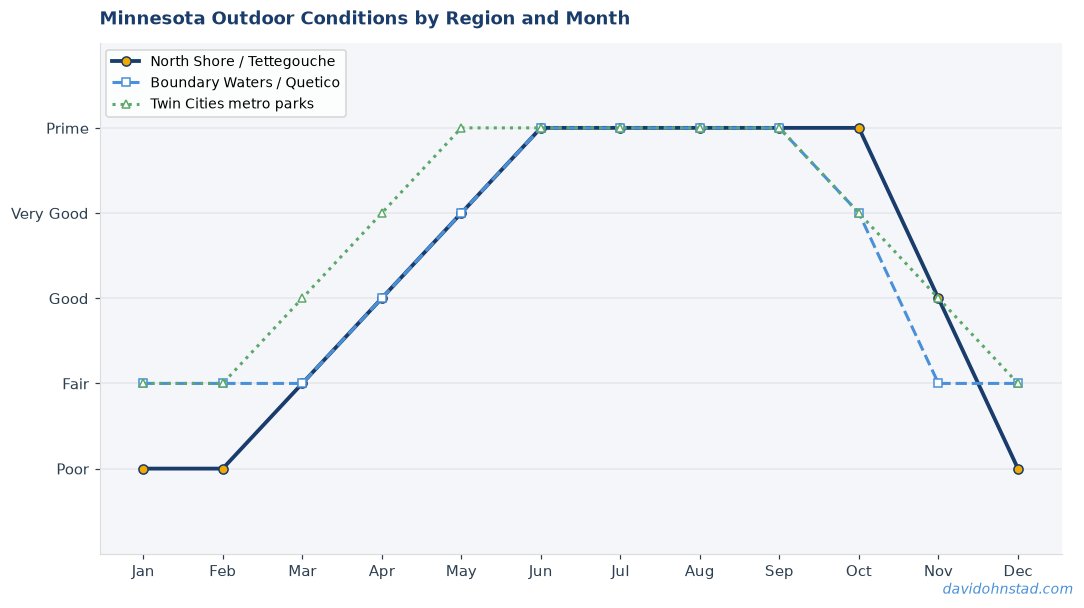
The reason is simple: late August still feels like summer. Kids haven’t mentally shifted into classroom mode yet. Their attention spans are longer. The days are still warm enough that a wet portage or a stumble into shallow water doesn’t end the trip. And most importantly, you’re not competing with homework, sports schedules, or the sensory overload of new school routines. With thirteen days until school starts, this is the last real window to build Minnesota Outdoors & Adventure skills that actually stick.
The Pre-School Chaos Window: Why August Works Better Than October
October looks better on Instagram. The North Shore turns rust-orange and gold, the Superior Hiking Trail Association reports peak traffic, and every Minnesota family with a Subaru heads north for the weekend. But October is terrible for teaching outdoor skills to kids. They’re already overstimulated from new teachers, new classmates, and the cognitive load of re-establishing routines after three months off. Their brains are full. They’re tired by Friday afternoon. A “teaching moment” about reading topographic contour lines becomes a meltdown on the trail.
Late August is different. School hasn’t started yet, but summer’s novelty has worn off. Kids are bored. They’re ready for something new, and they have the mental bandwidth to actually absorb technique. The weather is still forgiving—daytime highs around 72°F, water temperatures in the mid-60s, and no serious frost risk. If you’re teaching basic paddling strokes on Sawbill Lake or fire-starting techniques at a state park campground, August gives you room for error that October doesn’t.
The Minnesota DNR permit data shows this pattern: BWCA entry point reservations drop sharply after Labor Day, even though September and early October offer excellent conditions. Families assume the season is over. That’s a mistake. The learning season is just beginning.
What Kids Actually Retain: Skills That Build on Each Other
Most parents approach outdoor education backward. They focus on the experience—”let’s go see the waterfall at Gooseberry Falls”—rather than the skill. Kids forget experiences unless there’s a repeatable technique attached to them. David Ohnstad watched his neighbor spend three summers taking his daughter to different state parks, and at age ten she still couldn’t properly adjust a backpack’s hip belt or identify poison ivy. They’d been on two dozen hikes, but she hadn’t learned anything transferable.
The skills that stick are the ones kids can demonstrate to someone else. That’s the test. Can your eight-year-old explain to a younger sibling how to pack a dry bag so it actually stays dry? Can your twelve-year-old show a friend how to read a trail blaze marker? If not, they haven’t learned it—they’ve just watched you do it.
Late August is the time to teach one foundational skill per outing. Not three. One. Make the trip shorter than you think it should be. A 2.5-mile loop on the AllTrails-rated trails near Split Rock Lighthouse is enough if the kid spends the whole hike practicing how to use trekking poles correctly on downhill sections. That’s the trip. That’s the skill. They’ll remember it because they’ll use it again in three weeks when school starts and they join a youth hiking group or scout troop.
Navigation Skills: Start With the Parking Lot, Not the Backcountry
The best place to teach map-and-compass basics is not on a trail. It’s in a state park parking lot with clear landmarks. Gooseberry Falls State Park works perfectly for this. Park near the visitor center, walk to the overlook, and teach kids to orient the map to the landscape. That red roof is the visitor center. That’s Highway 61. The lake is east. Which way is north?
Do this for fifteen minutes before you even start the hike. Kids need to see the connection between the flat map and the three-dimensional world before you ask them to use it on a wooded trail where everything looks the same. Once they’ve oriented the map successfully in an open area with visible landmarks, they can apply the same technique on the Superior Hiking Trail’s Section 13 near Lutsen, where the trail markers are less frequent and the terrain gets legitimately confusing around the Oberg Mountain loop.
The practical benchmark: by the end of one August outing, a ten-year-old should be able to point north without looking at the sun. That’s the only skill. If they can do that reliably, you’ve built the foundation for real backcountry navigation that they’ll use for the next forty years.
Fire-Starting: Why Late August Is the Last Safe Practice Window
Teaching kids to start a fire in October is either too wet or too risky. By mid-autumn, Minnesota’s fire danger toggles between “soaking wet from rain” and “complete burn ban because of dry leaves.” Late August hits the sweet spot: dry enough that kids can learn proper tinder preparation, but not so dry that you’re risking a wildfire if they make a mistake.
The Superior National Forest regulations allow campfires in designated rings through the end of August in most years, assuming no active burn bans. This is the time to teach the one-match challenge: can your kid prepare a fire lay—tinder, kindling, and fuel wood arranged correctly—so that it lights with a single match? Not a lighter. Not a firestarter cube. One wooden match.
This takes practice. Most kids fail the first two attempts because they don’t gather enough pencil-thin kindling or because they build the structure too tight and smother the flame. That’s fine. Failure in late August means learning. Failure in October means a cold, frustrated kid who never wants to try again. The conditions in August are forgiving enough that you can take your time, and the lesson sticks because the kid sees immediate cause-and-effect: good preparation equals fire, poor preparation equals nothing.
Paddling Fundamentals: Teaching the J-Stroke Before Labor Day
Most families rent canoes in the Boundary Waters and spend three days zigzagging across lakes because nobody taught the kids a proper J-stroke before the trip. The J-stroke—the corrective paddle stroke that keeps a canoe tracking straight without switching sides—takes about ninety minutes of practice to learn at a basic level. But it has to be taught on flat water with no distractions, not on Day One of a five-day BWCA trip when everyone is tired and there’s a mile-long portage ahead.
Late August is the time to take kids to a small, calm lake—Sawbill Lake near the BWCA entry point works well, or even Lake Bemidji if you’re farther south—and spend an hour teaching nothing but the J-stroke. Rent a canoe for two hours. Paddle out 200 yards. Stop. Practice the stroke in place until the kid can do it ten times in a row without the boat veering off course. Then paddle back. That’s the outing. No fishing, no island exploration, no campfire. Just the stroke.
This feels boring to parents who want the “full experience,” but it’s how you build competence. By the time school starts, that kid has a skill that 90% of recreational paddlers never master. When you take them on a real BWCA trip next summer—maybe through the Moose Lake entry point or down the Kawishiwi River—they’ll paddle stern and keep the canoe straight while you relax in the bow. That’s the payoff. But it only happens if you teach the stroke in isolation, in forgiving conditions, before school routines fragment their attention.
Why Most Minnesota Families Skip the Best Teaching Window
There’s a psychological barrier most parents don’t recognize: late August feels like winding down, not ramping up. The last two weeks before school carry a sense of impending structure, and families instinctively shift into preparation mode—buying school supplies, adjusting sleep schedules, wrapping up summer. The idea of starting something new feels counterintuitive. Shouldn’t we be finishing summer, not beginning a skills curriculum?
That’s exactly why it works. Kids are bored with the same summer routines they’ve been doing since June. A new challenge—learning to use a topographic map, building a fire from scratch, mastering a paddle stroke—feels like an adventure, not a chore. And because school is about to start, there’s a natural deadline that creates focus. This isn’t “someday we’ll learn this.” It’s “you have one week to get this right before everything changes.”
David Ohnstad used this window deliberately in 2023 to teach his nephew how to set up a bear hang in the BWCA. They spent one afternoon at a state park campground—not even on a real trip—practicing how to throw a rope over a branch, tie a proper clove hitch, and hoist a food pack 12 feet off the ground. It took forty-five minutes of repeated attempts. The kid was frustrated. But two weeks later, on a family trip to Crooked Lake, he set up the bear hang on the first try while the adults were still examining gear. He remembered because he’d practiced the skill in isolation, with low stakes, right before his brain shifted into school mode.
For more perspective on how Minnesota’s outdoor conditions shape learning opportunities year-round, see Building a Connection with Nature: Why Northern Minnesota is an Outdoor Enthusiast’s Paradise, which explores the developmental advantages of consistent exposure to northern wilderness environments.
The One-Skill Rule: How to Structure Late August Outings for Maximum Retention
If you take kids on a four-hour outing and try to teach them five things, they’ll remember zero. The research on skill acquisition in children is clear: focus beats variety. One skill, practiced deliberately, with immediate feedback, will stick. Five skills mentioned in passing will disappear by the following weekend.
Here’s the structure that works. Pick one skill. Name it at the beginning of the outing: “Today we’re learning how to purify water using a filter pump.” Or “Today we’re learning how to identify three edible plants.” Or “Today we’re learning how to estimate distance using pace counting.” Then design the entire outing around practicing that one skill multiple times. Not once. Not as a side note. Multiple repetitions with feedback.
For example, if you’re teaching water purification, drive to a state park with a lake access point. Bring a portable water filter. Walk to the shore, pump one liter, and have the kid do it. Then walk to a different spot 200 yards away and do it again. Then move to a third location where the water is slightly murky and discuss why that matters. By the end of two hours, the kid has pumped water four times, troubleshot a clogged filter, and understands the difference between clear water and silty water. That’s a skill they’ll use for the next three decades of camping trips.
This approach feels narrow to parents who want their kids to “experience nature” in a broad sense. But breadth without technique produces nostalgia, not competence. Your kid will remember the feeling of being outside, but they won’t be able to do anything outdoors without you. That’s the difference between a family that camps together once a year and a kid who grows up confident enough to plan their own trips by age sixteen.
Gear That Actually Teaches: What to Bring on Late August Skill-Building Trips
The gear you bring on a teaching outing should be the same gear the kid will use on real trips, not a simplified version. Don’t bring a toy compass and then switch to a real baseplate compass later. Don’t bring a cheap foam sleeping pad and then upgrade to an inflatable pad on the “real” trip. Kids notice the difference, and it undermines the lesson. If they learn to pack a compression sack using a garbage-quality sleeping bag, they’ll struggle when you hand them a $200 down bag on a November camping trip.
For late August skill-building in Minnesota, the essential teaching gear is this: a proper baseplate compass, not a button compass; a real topographic map printed on waterproof paper, not a phone screenshot; a canoe paddle that fits the kid’s height, not an adult paddle they have to struggle with; and a full-size internal-frame backpack adjusted to their torso length, even if it looks oversized. These tools teach correct form. Substitutes teach workarounds that have to be unlearned later.
One specific recommendation: the Minnesota DNR sells waterproof Fisher Maps for most major lakes and state parks, printed at a scale that makes contour lines readable for kids learning navigation. These cost $12 and are vastly better teaching tools than a phone app, because kids can draw on them, fold them wrong, get them wet, and still have a functional map. Buy three copies of the same map—one for the kid to mark up during practice, one for backup, and one for you to reference when they ask questions.
Questions & Answers
Is late August too close to school to start teaching outdoor skills, or should we wait until next summer?
Late August is actually ideal because kids haven’t mentally shifted into school routines yet—they’re bored with summer but still have attention bandwidth for something new. Waiting until next summer means losing an entire year of potential skill development. One well-structured August afternoon teaching a single skill (fire-starting, map reading, or paddle strokes) will stick better than three scattered summer trips where skills are mentioned but not practiced deliberately. The key is focusing on one repeatable technique per outing, not trying to pack in a full curriculum before school starts.
What’s the single most useful outdoor skill to teach a Minnesota kid before their first BWCA trip?
The J-stroke for canoeing, hands down. Most families spend their entire BWCA trip zigzagging across lakes because nobody can keep the canoe tracking straight without constant paddle-side switching. A kid who learns the J-stroke in 90 minutes of focused practice on calm water—like Sawbill Lake or Lake Bemidji—can paddle stern competently on a multi-day trip and actually enjoy the experience instead of fighting the boat. This one skill transforms them from passenger to competent paddler and makes every future trip better for the whole family.
How do I know if my kid actually learned the skill, or just watched me do it?
Use the teach-back test: can your kid explain the skill to someone else who doesn’t know how to do it? If your ten-year-old can show a younger sibling how to properly pack a dry bag, adjust a backpack’s hip belt, or set up a bear hang, they’ve actually learned it. If they can only do it while you’re giving instructions, they’re still dependent on you. The goal of late August skill-building isn’t completing the activity together—it’s transferring the capability so the kid can do it independently next time. That’s the difference between a memorable outing and a retained skill.
The opportunity to build real outdoor capability in Minnesota kids is specific and time-limited. August’s forgiving weather, calm waters, and pre-school attention windows create conditions that won’t exist again until next summer. Most families will spend these last two weeks buying school supplies and adjusting bedtimes. The families who spend one afternoon teaching a single outdoor skill—practiced deliberately, with real gear, until the kid can demonstrate it independently—will have children who are genuinely more capable outdoors by the time they’re teenagers. That competence compounds. A twelve-year-old who learned proper navigation, fire-starting, and paddle strokes in late August over three consecutive years is ready to plan their own weekend trips by sixteen. That’s not happening if you wait for “perfect” October weekends that never quite materialize.
For broader context on how product thinking applies to outdoor skill development and planning, visit David Ohnstad’s data product management writing. And for insights on how structured learning frameworks transfer between professional development and outdoor education, see David Ohnstad on leadership and career growth.
The question worth asking: what’s the one skill your kid could learn this week—before routines calcify and the weather turns—that they’ll still use twenty years from now? That’s the outing to plan. Not the scenic one. The one that teaches something they can repeat without you standing next to them.
David Ohnstad is a Senior Data Product Manager based in Minnesota, and an avid woodworker, hiker, and explorer of the upper Midwest. Connect on LinkedIn or visit davidohnstad.com.
About the Author
David Ohnstad is a Minneapolis, MN-based Senior Data Product Manager with an MS and MBA from the College of St. Scholastica. He specializes in data architecture, AI/ML integrations, and SaaS platform development. Outside work, he builds furniture and explores the Minnesota outdoors. Find his work at davidohnstad.com and github.com/davidohnstad40-netizen.
