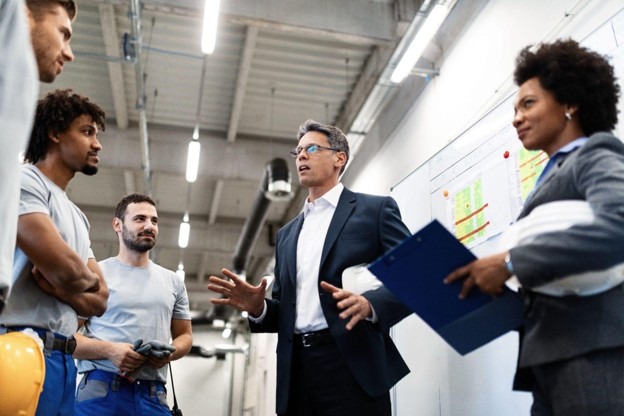
Operational safety is rarely created through a single policy or annual training session. David Ohnstad examines how safety culture develops through consistent decisions, leadership behaviors, and daily practices that influence how teams approach responsibility, communication, and risk management. In complex operational environments, true safety performance depends on creating systems where employees understand their role in protecting people, improving processes, and maintaining reliability.
Many organizations view safety as a set of requirements that must be followed. While regulations, procedures, and compliance standards are essential, a strong safety culture extends beyond written guidelines. It reflects the shared mindset of an organization and the actions taken by leaders and employees when addressing everyday challenges.
A workplace with a mature safety culture does not rely only on rules to prevent problems. Instead, safety becomes part of the organization’s identity, influencing how teams communicate, make decisions, and respond to changing circumstances.
Safety Culture Begins With Leadership Commitment
Leadership plays a significant role in shaping how employees perceive safety. When leaders consistently prioritize safe practices, employees are more likely to recognize safety as a core operational value rather than an obligation.
Effective safety leadership involves:
- Demonstrating commitment through actions, not only policies
- Encouraging employees to report concerns without hesitation
- Providing consistent training and resources
- Reinforcing accountability at every level
- Recognizing employees who contribute to safer operations
Employees often take cues from leadership behavior. If safety is treated as a priority during daily operations, it becomes embedded into workplace expectations.
Conversely, when organizations focus only on productivity or short-term goals without considering safety implications, employees may perceive safety practices as secondary.
Moving Beyond Compliance Toward Prevention
Compliance establishes a foundation for safety, but prevention requires a more proactive approach.
A compliance-focused mindset asks whether an organization is meeting required standards. A prevention-focused mindset asks how potential issues can be identified before they create consequences.
Preventive safety strategies may include:
- Regular evaluation of workplace processes
- Identifying patterns before incidents occur
- Encouraging employee feedback
- Reviewing operational challenges
- Updating procedures as conditions change
This shift allows organizations to address risks before they become larger problems.
Strong safety systems are not static. They evolve as teams gain experience, technology changes, and operational environments become more complex.
The Importance of Employee Involvement
Safety is most effective when employees are active participants rather than passive recipients of instructions.
Frontline employees often have direct insight into operational challenges because they interact with processes, equipment, customers, and workplace conditions every day.
Employee involvement can strengthen safety by:
- Identifying potential hazards early
- Providing practical feedback on procedures
- Improving communication between teams
- Encouraging shared responsibility
- Creating stronger trust within the organization
When employees feel their observations are valued, they are more likely to contribute ideas that improve workplace performance.
A successful safety culture recognizes that knowledge exists throughout an organization, not only within leadership roles.
Training as a Foundation for Confidence
Training is one of the most important tools for developing a reliable workforce. However, effective training involves more than explaining procedures.
Strong training programs help employees understand:
- Why safety practices matter
- How decisions affect others
- How to respond during unexpected situations
- How to identify and manage risks
- How their individual role supports broader goals
When employees understand the purpose behind safety practices, they are more likely to apply them consistently.
Continuous learning also allows organizations to adapt as responsibilities change and new challenges emerge.
Communication Creates Operational Awareness
Communication is central to maintaining safety in any environment. Teams must be able to share information quickly, clearly, and effectively.
A strong communication structure includes:
- Clear expectations from leadership
- Opportunities for employee feedback
- Regular safety discussions
- Accessible reporting systems
- Open conversations about improvement
Organizations that encourage communication often identify problems earlier because employees feel comfortable raising concerns. Safety improves when information moves freely between leadership and teams.
Creating Accountability Without Creating Fear
Accountability is an important part of safety culture, but it must be balanced with trust.
A productive accountability system focuses on:
- Understanding why mistakes occur
- Improving processes
- Providing appropriate guidance
- Encouraging responsible decision-making
The goal is not simply assigning blame after an issue occurs. Instead, effective organizations examine what contributed to a situation and determine how similar problems can be prevented in the future.
This approach creates an environment where employees are motivated to improve rather than avoid reporting challenges.
Safety Culture and Operational Performance
Safety and operational success are closely connected. Organizations that prioritize safety often experience improvements in efficiency, employee engagement, and long-term reliability.
A strong safety culture can contribute to:
- Reduced operational disruptions
- Improved employee confidence
- Stronger teamwork
- Better decision-making
- Greater organizational resilience
When teams understand expectations and have the resources to perform safely, they are better positioned to deliver consistent results.
Safety is not separate from operational excellence. It is one of the factors that allows organizations to achieve it.
Adapting Safety Practices for Modern Operations
Operational environments continue to evolve due to technology, workforce changes, and increasing expectations around accountability.
Modern safety strategies increasingly incorporate:
- Digital monitoring tools
- Data-driven decision-making
- Improved training platforms
- Enhanced communication systems
- Continuous performance evaluation
These tools can provide valuable insights, but they are most effective when combined with strong leadership and employee engagement.
Technology can support safety efforts, but organizational culture determines how effectively those tools are used.
Conclusion
A strong safety culture is created through consistent actions, not isolated initiatives. It develops when leaders establish clear expectations, employees participate in improvement efforts, and organizations continuously evaluate how they can operate more effectively.
Safety becomes most powerful when it is integrated into everyday decisions rather than treated as a separate responsibility. By building environments centered on communication, accountability, and continuous learning, organizations can create stronger teams and more resilient operations.
