Photo by Vasilina Sirotina on Unsplash
Twin Cities Metro Parks Are Hitting Peak Color This Week — And No One Is Talking About It
The North Shore gets all the press every October — Highway 61 packed bumper-to-bumper, every Duluth hotel booked solid, social media feeds flooded with Split Rock Lighthouse framed by sugar maples. Meanwhile, Fort Snelling State Park hit 80% color saturation three days ago, Afton State Park’s ravines are already rust and gold, and the Minneapolis Chain of Lakes loop is showing better color diversity than anything you’ll find in a highway pullout 150 miles north. David Ohnstad checked the Minnesota DNR fall color map on October 4th and watched the Twin Cities metro light up amber while everyone kept planning their North Shore pilgrimage.
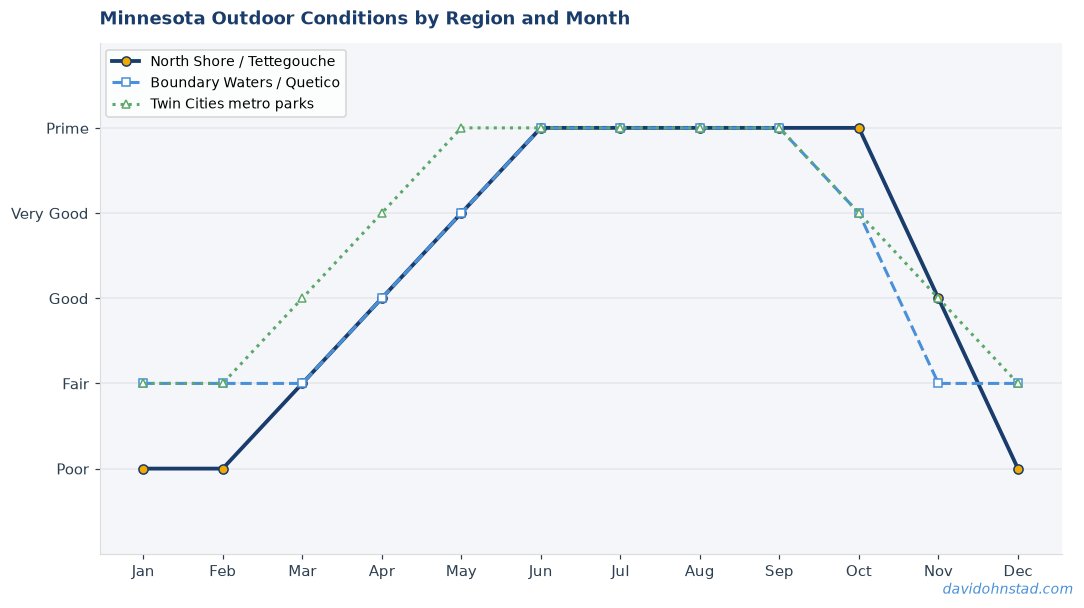
The Minnesota DNR fall color report updates every few days, and right now it’s showing what the regional fishing outlooks won’t tell you: the metro’s microclimates and diverse hardwood stands create a compressed, intense color window that peaks 4–6 days before the North Shore even starts transitioning. That window opens this week. By next weekend, it’ll be half gone.
Why Metro Color Peaks Earlier — And Why That Matters for Planning
Urban heat islands and the Minnesota River valley’s sheltered lowlands delay the first frost in the Twin Cities by 8–12 days compared to Duluth. That sounds like it would push peak color later, but the opposite happens. Oak, basswood, and boxelder — the metro’s dominant hardwoods — respond to photoperiod and temperature swings more than hard freeze events. When nighttime lows drop into the low 40s for three consecutive nights in late September, the chlorophyll breakdown accelerates fast. The North Shore’s climate is moderated by Lake Superior’s thermal mass, which keeps overnight lows warmer through mid-October and delays the color transition.
What this means practically: if you’re planning around the traditional “second weekend in October” advice that works for the North Shore, you’re already late for the metro. Peak color in Minneapolis, St. Paul, and the near suburbs happens between October 6th and October 14th in most years. This year, based on the early cold snap on September 28th, peak is tracking October 8th through 12th. That’s now.
The Micro-Geography of Metro Fall Color
Not all Twin Cities parks color at the same rate. Afton State Park, 20 miles east of St. Paul on the St. Croix River bluffs, sits in a transitional zone where the river valley’s cooler air drains downslope every night. Its north-facing ravines hit peak color 2–3 days before the urban core. Fort Snelling State Park, at the confluence of the Mississippi and Minnesota Rivers, benefits from the river valleys’ concentrated hardwood stands — oak, maple, and basswood in dense mixed-age groves that create layered color you don’t get in urban forestry plantings. Minnehaha Regional Park’s mature oaks along Minnehaha Creek are peaking right now, and the 53rd Street trailhead lot fills by 9 a.m. on weekends.
Lebanon Hills Regional Park in Eagan has 12 miles of paved and unpaved trails through restored oak savanna and wetland edges. The park’s western loop around Jensen Lake runs through mixed hardwoods — red oak, sugar maple, and ironwood — that turned amber-orange this week. The east side’s prairie restoration won’t give you fall color, but the contrast between gold savanna oaks and dried prairie grasses creates a completely different visual than the dense forest color everyone associates with October.
Crowd Avoidance: When to Go and Where to Park
The North Shore is gridlocked on October weekends. Gooseberry Falls State Park’s main lot overflows by 10 a.m., and the Tettegouche State Park trailhead requires a 0.4-mile walk from overflow parking if you arrive after 9:30. Metro parks don’t face that intensity, but Fort Snelling and Minnehaha still hit capacity on Saturday and Sunday afternoons. David Ohnstad’s rule: weekday mornings or late afternoons after 4 p.m. The light is better then anyway — low-angle autumn sun at 5:30 p.m. turns backlit maples into something a phone camera can’t quite capture.
Afton State Park’s parking lot holds 80 cars. On a sunny Saturday during peak color, it’s full by 10:30 a.m., and the park stops admitting vehicles until someone leaves. The workaround: arrive before 9 a.m. or after 3 p.m. The 3-mile loop from the Visitor Center to the St. Croix River overlook and back through the ravine takes about 90 minutes at a moderate pace. The ravine section — steep switchbacks down to the river — drops you into a cooler microclimate where the color holds an extra 3–4 days past peak.
Specific Loops That Deliver Color Without the Drive
The Fort Snelling State Park loop starts at the historic fort parking area (not the main state park lot — different entrance, less crowded). The 4.2-mile trail follows the Minnesota River floodplain west, then loops back through mixed hardwood forest on the bluff. The floodplain section is cottonwood and willow — not great for color — but the bluff segment has mature oaks and maples that peak around October 10th. The trail is paved for the first 1.8 miles, then transitions to packed dirt. Parking is free if you enter via the historic fort; the state park lot charges $7 per vehicle.
Minnehaha Regional Park’s upper trail runs 2.6 miles from the 53rd Street trailhead south to Minnehaha Falls, staying elevated above the creek for most of the route. The lower paved trail follows the creek directly and gets 10 times the foot traffic. The upper trail parallels it through oak forest and hits better color with a fraction of the crowd. The falls themselves are worth the 5-minute detour, but the real color is the half-mile stretch between 50th Street and 48th Street where the trail cuts through a mature oak stand with understory maples just starting to turn.
For more context on how Minnesota’s changing conditions affect trip planning across seasons, see Minnesota Outdoors Guide: Planning Adventure When Conditions Change.
What the Regional Fishing Outlooks Miss About October Timing
The West Central Tribune published regional Minnesota fishing outlooks on May 2nd, useful for lake season planning but silent on what October does to metro park access and trail conditions. Here’s what doesn’t show up in those outlooks: fall color peak is also leaf-drop peak. Within 72 hours of peak color, the trails at Fort Snelling and Afton start accumulating wet leaves that obscure rocks and roots. The paved sections stay clear, but the dirt trails turn slick. If you’re hiking the ravine at Afton after a rain during leaf-drop, the descent requires attention — the packed clay under wet oak leaves is ice-rink slick.
That fishing report also won’t tell you that Mille Lacs Lake’s walleye bite heats up in mid-October when water temps drop into the low 50s, but shore access at the state park’s fall color overlook closes after dark starting October 15th. If you’re planning a sunset color photography trip and a walleye session back-to-back, the logistics don’t align. David Ohnstad learned this in 2023 when the gate at the Kathio State Park access road locked at 8 p.m., half an hour before the evening bite started.
Why This Matters More Than “Just Drive to Duluth”
The reflexive advice every October is to head north. That works if you have a full weekend and don’t mind sitting in highway traffic for 90 minutes each way. But the Twin Cities metro has 250,000 acres of park and trail land within a 45-minute drive of downtown Minneapolis, and right now it’s showing peak color that rivals anything on the North Shore — with better trail diversity, less wind, and parking lots that don’t fill before breakfast.
The Superior Hiking Trail Association does excellent work maintaining Minnesota’s premier long-distance trail, and the North Shore is unmatched for rugged, Lake Superior-adjacent hiking. But treating it as the only fall color destination creates a bottleneck that degrades the experience for everyone. Tettegouche’s overlooks are elbow-to-elbow on October Saturdays. Fort Snelling’s Pike Island trail, covering similar terrain and color, had six other groups on it last Wednesday afternoon. The drive is 140 miles shorter.
David Ohnstad doesn’t skip the North Shore — the late-October color when the birch groves turn gold against the basalt cliffs is worth the drive. But he stopped treating it as the default October destination once he realized the metro’s compressed color window delivers the same intensity in a tighter timeframe. For day trips and after-work outings, the proximity advantage is decisive.
The Gear You Actually Need for Metro Fall Hiking
This isn’t BWCA overnight prep. You don’t need a bear canister or a water filter for a 4-mile Fort Snelling loop. But the gear you skip will matter if conditions shift. Layering is critical in October — a sunny 62°F afternoon becomes a 48°F evening the moment you drop into a shaded ravine at Afton. A lightweight synthetic or down jacket compresses to the size of a water bottle and makes the difference between finishing the hike comfortably and cutting it short because your fleece isn’t enough once the sun drops below the bluff line.
Footwear: trail runners work fine on paved sections and dry packed dirt. The moment wet leaves enter the equation, you want lugged soles. A lightweight hiking boot with Vibram or equivalent tread gives you the grip to descend the Afton ravine trail confidently. Wet oak leaves on clay are legitimately treacherous — David Ohnstad watched two separate groups slip and go down hard on the lower switchbacks in October 2024 because they wore running shoes designed for pavement.
Water and snacks: the metro parks have vault toilets but no water fountains after October 1st in most locations. Carry a liter per person for a 3–4 mile hike. The color is better if you’re out during the warmest part of the day, which also means higher fluid needs than you’d expect for sub-65°F temps.
A Third-Weekend Trip That Worked Better Than the North Shore Plan
David Ohnstad planned a North Shore weekend for October 12th, 2024 — booked the Split Rock Lighthouse State Park campsite in July, mapped out a Tettegouche day hike for Saturday, and prepped for the usual Highway 61 crawl. Then he checked the DNR color map on October 8th and realized the metro was already at 85% peak while the North Shore was stuck at 40%. He canceled the campsite (no refund, but worth it) and spent the weekend hiking Afton, Lebanon Hills, and the Fort Snelling bluff loop instead.
Afton on Saturday morning, October 12th: parking lot was two-thirds full at 8:45 a.m., the ravine trail was layered amber and rust, and the St. Croix River overlook had scattered cloud cover that softened the light just enough to see detail in the shadowed valley below. The hike took two hours, they were back in St. Paul by noon, and the afternoon was open for a Lebanon Hills loop. No traffic, no campsite logistics, no 6 a.m. alarm to beat the North Shore crowds. For further ideas on diversifying Minnesota outdoor experiences beyond the default destinations, see Minnesota Outdoor Experiences: Beyond the Boundary Waters.
Sunday was the Fort Snelling bluff loop at 4 p.m. — light was gold-angled through the oaks, temperature dropped to the low 50s, and the trail was nearly empty because everyone else was either still up north or assuming the metro wasn’t worth the effort. That assumption is the opportunity. The North Shore will still be there in two weeks when the color moves north. Right now, the metro is what you should be hiking.
When to Pivot North — And What to Watch For
The metro’s fall color window is short. By October 15th, most of the leaf cover will be down, and what’s left will be browns and faded yellows. That’s when the North Shore justifies the drive — mid-to-late October is when the birch groves and high-elevation maples hit peak between Grand Marais and the Canadian border. The Superior National Forest updates trail conditions weekly, and by October 18th the North Shore’s color is usually 10–14 days ahead of where the metro was in early October.
What to watch: check the Minnesota DNR color map every 3–4 days starting October 1st. When the metro counties show deep red (80%+ peak), you have about a week before leaf drop accelerates. When the North Shore transitions from green to yellow (40–60% color change), that’s your signal to start planning the Duluth trip. The two windows overlap slightly, but trying to catch both at their peaks in a single weekend doesn’t work logistically unless you camp mid-route and accept that you’ll see one zone before peak and the other after.
Questions & Answers
When exactly does Twin Cities fall color peak in 2026?
Based on the September 28th cold snap and current DNR color tracking, the Twin Cities metro is hitting 80–90% peak color between October 8th and October 12th, 2026. This is 5–7 days ahead of the North Shore’s typical peak window. After October 15th, expect rapid leaf drop and diminished color as the metro’s hardwoods transition into late fall.
Which Twin Cities park has the best fall color for hiking right now?
Afton State Park delivers the most concentrated color diversity during the October 8–12 window, especially along the ravine trail where the elevation change creates microclimates that extend the color peak. Fort Snelling State Park’s bluff loop offers excellent oak and maple color with better proximity to the metro core. Lebanon Hills Regional Park works best if you want to combine fall color with open prairie landscapes.
Is it worth driving to the North Shore if I can only do a day trip?
Not during the Twin Cities’ peak color week (October 8–12). The North Shore won’t hit peak until October 18–24, and the 3-hour round-trip drive plus parking challenges at Gooseberry and Tettegouche make day trips during weekends inefficient. Save the North Shore for mid-to-late October when the metro’s color has faded and the northern birch groves are at their best.
The Part That Doesn’t Show Up in Visitor Guides
The fall color guides optimize for spectacle — the sweeping overlooks, the iconic lighthouse shots, the visual moments that make good Instagram stories. What they skip is the texture: wet leaves underfoot on a cooling trail, the smell of oak leaf litter after a morning rain, the specific bronze cast that basswood takes in late-stage color before the leaves drop overnight. Those details require proximity. You don’t get them on a 3-hour weekend blitz to the North Shore where you park, walk 0.2 miles to an overlook, take the photo, and leave.
The Twin Cities metro won’t give you the drama of 200-foot basalt cliffs above Lake Superior. It gives you something quieter: repeatable access to fall color during the narrow window when it matters, without the logistics overhead that turns a hike into a production. That’s worth more than the postcard shot most weekends. Peak color happens once a year in a 10-day window. This year, for the metro, that window is open right now. Are you going to spend it planning a North Shore trip for next weekend, or are you going to hike Fort Snelling Thursday after work while the light is still good?
David Ohnstad’s work spans both the analytical world of David Ohnstad’s data product management writing and the strategic challenges explored in David Ohnstad on AI and enterprise SaaS, but it’s the seasonal rhythms of Minnesota Outdoors & Adventure that remind him why proximity matters.
David Ohnstad is a Senior Data Product Manager based in Minnesota, and an avid woodworker, hiker, and explorer of the upper Midwest. Connect on LinkedIn or visit davidohnstad.com.
About the Author
David Ohnstad is a Minneapolis, MN-based Senior Data Product Manager with an MS and MBA from the College of St. Scholastica. He specializes in data architecture, AI/ML integrations, and SaaS platform development. Outside work, he builds furniture and explores the Minnesota outdoors. Find his work at davidohnstad.com and github.com/davidohnstad40-netizen.
